
People
Sagan Friant - Principal Investigator

Assistant Professor of Anthropology
a co-hire of Huck Institutes of the Life Sciences
Center for Infectious Disease Dynamics
Pennsylvania State University
Affiliated grad programs: Anthropology, Huck Interdisciplinary Graduate Programs in Ecology and Molecular, Cellular, and Integrative Biosciences
Director, Human Ecology and Health Initiative
email: sagan.friant@psu.edu
I am an interdisciplinary anthropologist studying the social and ecological origins of zoonotic diseases, those that spill over from animals to people. Spillover is deeply shaped by human behavior and ecology, yet efforts to prevent it remain dominated by biomedical perspectives. My work brings together evolutionary, ecological, and ethnographic approaches to understand how everyday activities like hunting, farming, and living alongside wildlife shape exposure to disease.
For nearly 20 years, I have worked in Cross River State, Nigeria, a biodiversity and emerging disease hotspot, partnering with communities and public health institutions to develop evidence-based interventions and policy. I founded and direct the Human Ecology and Health Initiative, Inc. and lead projects on hunting and health and zoonotic spillover, including Lassa fever and mpox. I aim to identify solutions that deliver win-wins for food, environmental, and global health security.
At home, I’m a mom of two littles and an enthusiastic, if not especially successful, gardener. In the field, I’m always on the hunt for the best Afang soup and fresh up wine.
Postdocs:
David Simons, PhD, MD
The Pennsylvania State University
email: dzs2659@psu.edu
website: www.dsimons.org; GitHub: https://github.com/DidDrog11
David Simons is a postdoctoral scholar working on the SCAPES project. His PhD examined the association between land use and rodent ecology and downstream effects on Lassa fever risk in Eastern Sierra Leone. Drawing on methods from ecology, epidemiology, and medicine, his work adopts One Health approaches to understand zoonotic spillover risk from rodent hosts to humans in West Africa. Prior to research, David worked as a medical doctor in infectious diseases and emergency medicine.

Graduate students
Christina Harden, MPH
Intercollege Graduate Degree Program in Ecology
The Huck Institutes of the Life Sciences
The Pennsylvania State University
website: xtinaharden.carrd.co
email: cmh7042@psu.edu
Christina Harden is a PhD student and J. Lloyd Huck Graduate Fellow in the Ecology Program at Penn State. She holds a BS in Environmental Science from Cornell University and an MPH in Epidemiology from Yale School of Public Health. Her research with the SCAPES Project uses a mixed-methods approach to understand human-rodent contact and Lassa fever risk in Nigeria, integrating community-based participatory research with ecological methods to reveal the socioecological dynamics driving zoonotic disease risk.

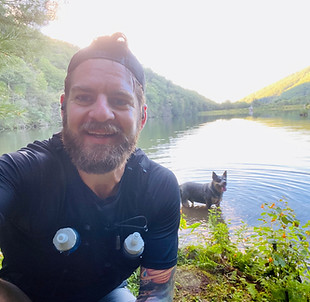
Matthew Keenan is a PhD student in Anthropology at Penn State. His research examines zoonotic disease spillover risk in North America as mediated by human hunting practices. Prior to joining the RISK Lab, he developed geospatial products on bushmeat trade in West Africa and conducted analysis on human-rodent interactions. He also has field experience in archaeological research in the American Southeast and ethnographic research with Martu communities in Australia

Kelly Schenk is a PhD student in Anthropology at Penn State. Her research examines how landscape use shapes human-rodent interactions and zoonotic disease spillover risk. She holds a BA in Anthropology and an MPH in Infectious Disease and Microbiology from the University of Pittsburgh, where her thesis investigated tickborne pathogen prevalence across urban, suburban, and rural landscapes in southwest Pennsylvania. Prior to her PhD, Kelly was a CSTE Applied Epidemiology Fellow at the Minnesota Department of Health's Zoonotic Diseases Unit and epidemiologist at the Pennsylvania Department of Health.

Simi Aruwajoye, MPH
Intercollege Graduate Degree Program in Ecology (co-advised by Franny Buderman)
The Huck Institutes of the Life Sciences
The Pennsylvania State University
email: saa6509@psu.edu
Similoluwa (Simi) Aruwajoye is a PhD student in the Ecology Program at Penn State. She holds a BS in Biology from the University of Louisiana in Monroe, and an MPH in Epidemiology from UTHealth School of Public Health in Austin. Prior to beginning her PhD, she worked as an Epidemiologist with the Texas Department of State Health Services. Her research is focused on mpox in Nigeria and uses a mixed-methods approach to understand human-wildlife interactions and support public health decision-making.
Undergraduate students

Aiobinn Conway
Undergraduate Research Assitant (major: Anthropology)
Field Research Team

Wilfred Akonjom Ayambem, PhD
CREHP Project Manager

Nzube Michael Ifebueme, PhD
SCAPES Project Manager

Fisayomi T. Aderibigbe, DVM

Helen Ignatius, DVM, MSc (Virology)
RISK Lab Alumni
Postdocs:

Katharine Thompson, PhD
RISK Lab: Postdoctoral scholar & Assistant Research Professor
current position: Affiliate Assistant Research Professor, Penn State & Stony Brooke University

Metrey Tiv, MD
RISK Lab: postdoctoral scholar
current position: PhD student at Durham University
Graduate students:

Christian Herrera, PhD, MBA
RISK Lab: PhD student in Molecular, Cellular, and Integrative Biosciences
Current Position: NSF I-Corps Technology Scout Lead
Undergraduate students

Se Morrison
Undergraduate Research Honors Student (Anthropology, History, and Classics & Ancient Mediterranean Studies)

Grace Lemke
Undergraduate Research Honors Student (Biology, Anthropology and Spanish)

Emma Petrick
Undergraduate Research Honors Student (majors: Anthropology and Spanish)
Field Researchers

Azuka Adeke MBBS, MPH, MSc, FWACP
Current position: Public Health Physician/Epidemiologist
Alex Ekwueme Federal University Teaching Hospital, Abakaliki, Nigeria

Alobi O. Alobi, PhD
Current Position: Lecturer
University of Cross River State, UNICROSS, Calabar, Nigeria

Oshama Maria Otukpa, M.Ed
Current Position: Assistant Lecturer
University of Calabar, Calabar, Nigeria